

Abacus Motorhomes
Driving a Motorhome Advice Guide
Abacus Motorhomes Advice Hub
How to Drive a Motorhome: The Complete Beginner’s Guide
Learning how to drive a motorhome for the first time can feel daunting, particularly if you are used to driving a car. Motorhomes are larger, heavier and handle differently, but with the right preparation and a little practice, you can build your confidence and enjoy touring at your own pace.
In this beginner’s guide, Abacus Motorhomes explains how to drive a motorhome safely, covering driving position, vehicle controls, height and width restrictions, motorhome payload, driving licences, reversing, parking and motorway driving. Whether you are planning your first motorhome holiday or considering buying a motorhome, these practical tips will help you prepare for the road ahead.
What Do You Need Help With?
The most important thing to remember when driving a motorhome is that you need to account for its size, weight and dimensions at all times. Motorhomes can be taller, wider and longer than a typical car, and may need more time and space to accelerate, turn and stop. Plan your journey, leave plenty of room and never feel pressured to rush a manoeuvre.
1. Getting Comfortable Behind the Wheel of a Motorhome
Before heading out on a long journey, take time to familiarise yourself with the motorhome. Even if you have driven larger vehicles before, the driving position, mirrors, controls and handling can vary between models.
If you are hiring from Abacus Motorhomes, make sure you understand how your specific hire vehicle operates before leaving. Knowing where the controls are and how the vehicle feels will help you drive more confidently from the start.
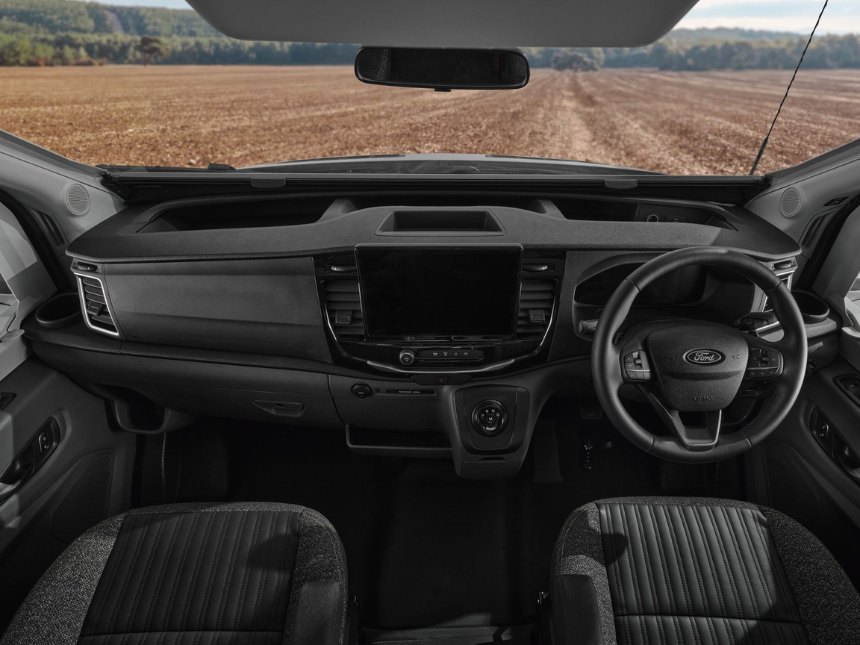
Adjust Your Driving Position
Set your seat, steering wheel and mirrors before moving off. Make sure you can comfortably reach the pedals and controls, and that you have a clear view of the road and the area around the motorhome.
Motorhomes can have different blind spots from cars, so take time to understand what you can and cannot see through the windscreen and mirrors.
Remember: Adjust your mirrors before you set off, not when you are already moving.
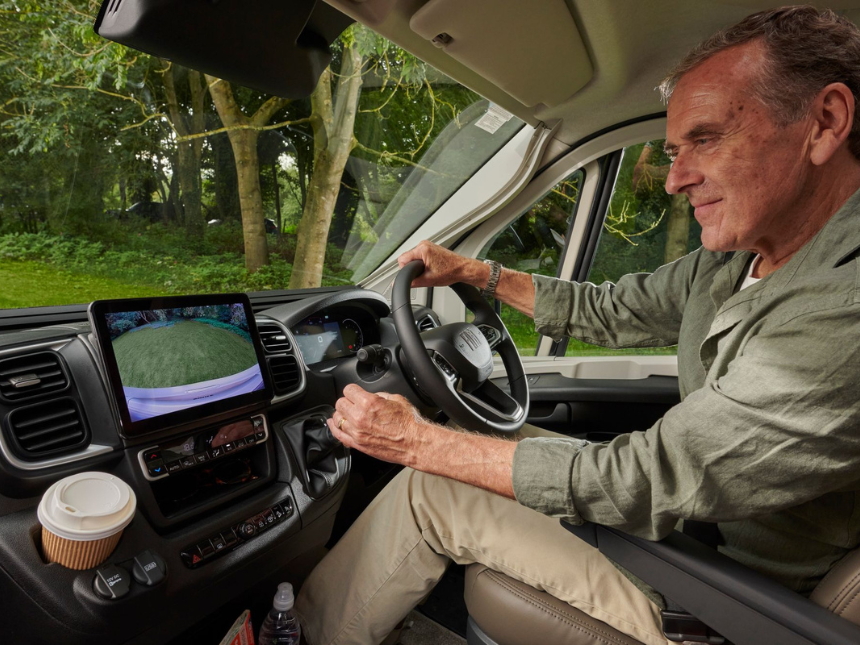
Learn the Motorhome Controls
Before starting your journey, locate the indicators, headlights, wipers, heating controls, handbrake and any driver-assistance systems. Check whether the vehicle has a reversing camera or parking sensors, and understand how to use them.
If you are driving an unfamiliar model, take a moment to read the handbook and ask for help with any controls you do not recognise.
Remember: It is much easier to learn the controls while parked than to work them out in traffic.
Practise Somewhere Quiet
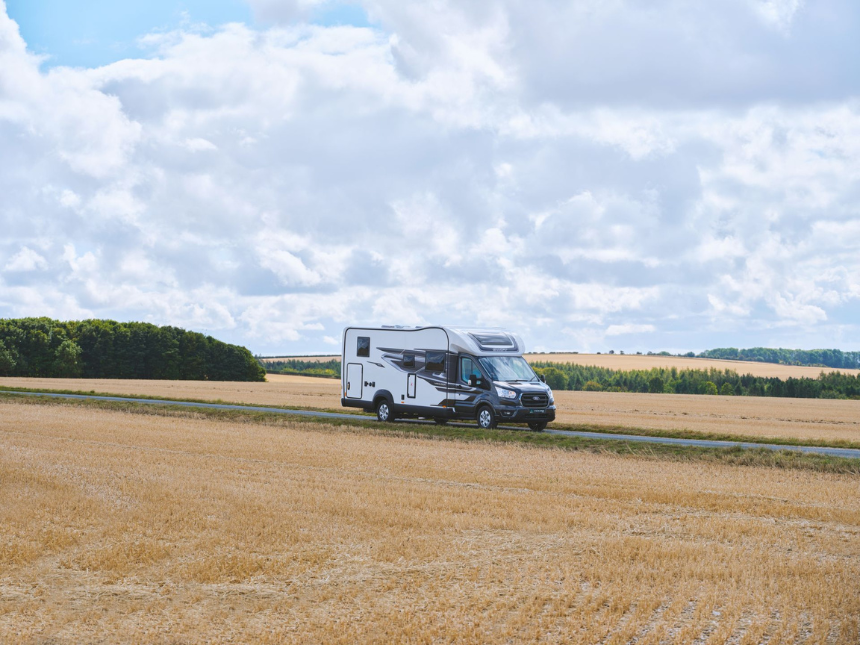
If you are new to driving a motorhome, start on quiet, wide roads or in a suitable open area. Practise moving off, braking smoothly, turning and reversing before tackling busier roads or unfamiliar destinations.
Give yourself time to get used to the vehicle’s size and turning circle. If you feel nervous, consider professional motorhome driving or manoeuvring tuition.
Remember: Build your confidence gradually rather than trying to do everything on your first journey.
Our tip: Your first few miles are about becoming familiar with the vehicle. Keep your journey simple, leave extra time and stop somewhere safe if you need to check anything.
2. What to Check Before Driving a Motorhome
Carrying out a few basic checks before every journey can help prevent damage and make your motorhome holiday safer. Before driving off, make sure the vehicle is ready for the road both inside and out.
Check the outside of your motorhome
- Check the tyres for visible damage and make sure they are inflated to the recommended pressures.
- Check that exterior lockers, doors and storage compartments are closed securely.
- Make sure any steps, awnings, aerials and other external equipment are stowed.
- Remove electrical hook-up cables and disconnect any campsite services.
- Check that bike racks, bicycles and other external loads are secure.
- Look around the vehicle for obstacles, low branches or anything that could be caught as you pull away.
- Check that the vehicle’s lights and indicators are working correctly.
Check the inside of your motorhome
- Secure loose items so they cannot move around while travelling.
- Close and latch cupboards, drawers, fridge doors and rooflights.
- Make sure windows and external doors are secured.
- Follow the vehicle instructions for the gas system and other onboard equipment.
- Make sure the cab and travel seats are clear and everyone has a suitable seatbelt.
- Check that passengers are seated and ready before moving off.
Important: Passengers must use designated travel seats and seatbelts as required. Do not allow anyone to move around the living area while the motorhome is in motion. Stop somewhere safe if someone needs to get up.
3. Understanding Motorhome Height, Width, Length and Payload
Understanding your motorhome’s dimensions and weight is one of the most important parts of driving safely. A motorhome is larger than a typical car, so you need to consider its height, width, length and weight when planning a route, passing other vehicles, negotiating corners and choosing somewhere to park.
Before setting off, familiarise yourself with the exact dimensions and weight limits of the motorhome you are driving. Do not rely on estimates or assume that every motorhome has the same measurements.
Motorhome Height
Knowing your motorhome’s overall height is essential when approaching low bridges, height barriers, tunnels, covered car parks and roads with overhanging branches.
Remember to account for roof-mounted equipment, such as aerials or satellite systems, where applicable. Always check the exact height of your vehicle and look for road signs showing height restrictions.
If you are hiring a motorhome from Abacus, check the height information provided for your specific hire vehicle before setting off.
Top tip: Keep a note of your motorhome’s height somewhere easy to see from the driving seat.
Motorhome Width and Length
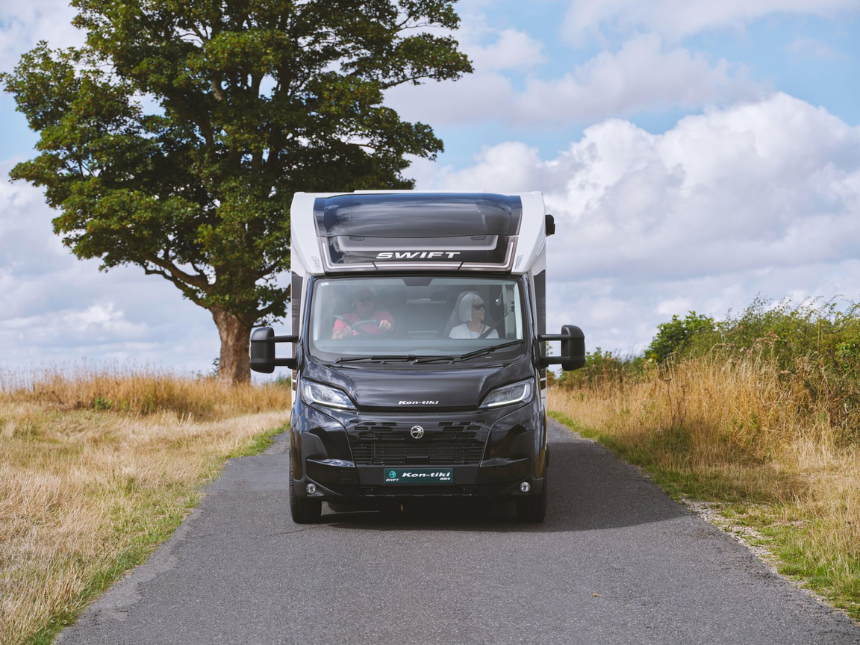
Motorhomes are often wider and longer than cars. This affects how much room you need when passing parked vehicles, driving along narrow roads, turning at junctions and entering parking spaces.
Allow extra clearance on both sides of the vehicle and remember that the rear of the motorhome may swing out when turning. Be particularly careful on rural roads, where hedges, walls and oncoming traffic can leave little room to manoeuvre.
Before entering a car park or narrow access road, check that your motorhome can fit safely and that there are no width or length restrictions.
Top tip: Look well ahead and plan your position early rather than waiting until a narrow section is directly in front of you.
Motorhome Weight and Payload
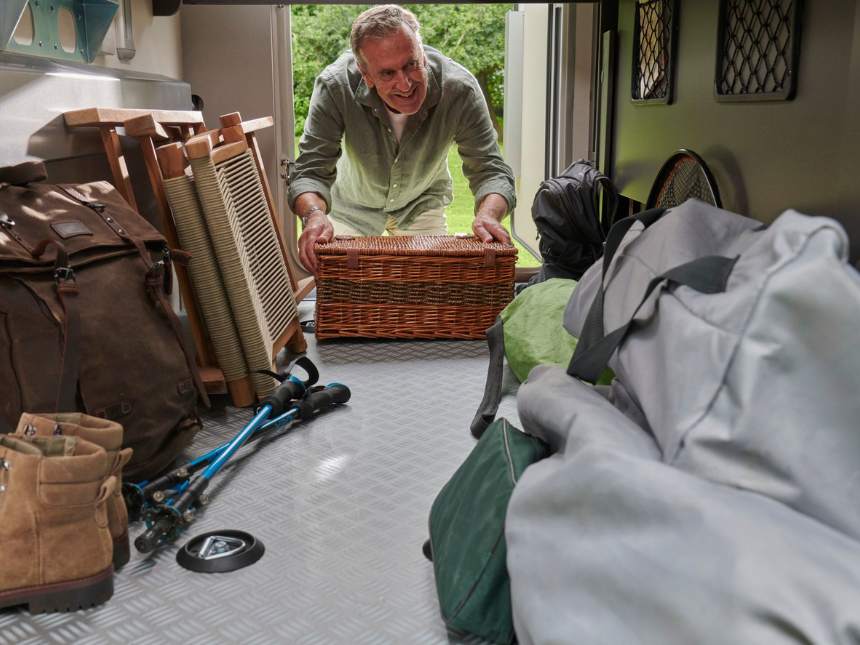
Motorhome payload is the carrying capacity available for passengers, luggage, food, clothing, water and additional equipment. Loading too much can take the vehicle over its permitted weight limit.
Check the motorhome’s maximum authorised mass (MAM) and understand how much payload is available. The available capacity depends on the vehicle and its actual weight, so use the correct figures for your specific motorhome.
Remember that everything you add to the vehicle contributes to its weight. Plan what you take with you and avoid carrying unnecessary items.
Top tip: Use the Abacus Motorhomes payload calculator to help understand your available carrying capacity before loading up for a trip.
Use Our Motorhome Payload Calculator
Not sure how much you can carry in your motorhome? Use the Abacus Motorhomes payload calculator to help work out the available capacity for passengers, luggage and equipment. Enter the correct figures for your vehicle and always make sure you remain within its permitted weight limits.
Check your driving licence before setting off
Your driving licence determines which motorhomes you are legally entitled to drive. The rules depend on factors including the vehicle’s maximum authorised mass (MAM), your licence category and when your driving entitlement was obtained.
Do not assume that every motorhome can be driven on a standard car licence. Before buying or hiring a motorhome, check your entitlement against the specific vehicle you intend to drive.
Use Our Motorhome Licence Checker
Check which motorhomes you may be entitled to drive with our licence checker. You should also confirm your entitlement against the vehicle details and current official DVLA guidance before driving.
Plan a motorhome-friendly route
When planning a motorhome journey, consider the vehicle’s height, width, length and weight. A route that is suitable for a car may not be suitable for a larger motorhome, particularly where there are low bridges, narrow lanes or weight restrictions.
A motorhome-specific sat-nav can help you plan around vehicle dimensions, but you should always pay attention to road signs and restrictions. Do not rely on navigation alone.
If you are hiring from Abacus, read our motorhome holiday planning guide for more advice on preparing for your trip, planning routes and choosing suitable destinations.
Our tip: Check your vehicle’s dimensions and weight before every trip, especially if you are driving a different motorhome from the one you used previously.
4. Driving a Motorhome on the Road
Once you are moving, focus on smooth, predictable driving. A motorhome can respond differently from a car, particularly when it is fully loaded or travelling in poor weather. Allow extra time and space, look well ahead and avoid sudden changes in speed or direction.
Leave More Space
A heavier vehicle can need more distance to stop. Leave a generous gap from the vehicle in front and increase it further in wet, icy or windy conditions.
Accelerate Smoothly
Motorhomes may take longer to build speed, especially uphill. Wait for a safe gap when joining traffic and avoid forcing your way into a space that is too small.
Check Your Mirrors
Use your mirrors regularly to understand what is happening around the vehicle. Check them before signalling, changing position, turning or manoeuvring.
Keep your speed appropriate
Drive at a speed that allows you to remain in control and stop safely within the distance you can see to be clear. A motorhome’s size, weight, load and handling mean that a lower speed may be appropriate even when the road limit is higher.
UK speed limits can differ according to the vehicle’s classification, weight and road type. Do not assume that the national speed limit for a car applies to your motorhome. Check the current rules for your specific vehicle and always follow signed limits.
Check UK Motorhome Speed Limits
Read the current guidance before travelling, especially if your motorhome is heavier than a typical car or has a maximum authorised mass over 3.05 tonnes.
5. Corners, Junctions and Narrow Roads
Motorhomes need more room to turn than most cars. Their longer wheelbase and rear overhang mean that turning too early can cause the rear wheels to mount a kerb or the back of the vehicle to swing into an obstacle.
Taking corners in a motorhome
- Reduce your speed before reaching the bend rather than braking sharply halfway through it.
- Approach corners more slowly than you might in a car.
- Allow enough space for the rear wheels to follow the turn without clipping the kerb.
- Check your mirrors and be aware of the rear of the vehicle swinging out.
- Avoid sudden steering or braking, particularly when the motorhome is heavily loaded.
Approaching junctions
- Position the vehicle carefully and check mirrors before turning.
- Allow extra room for the rear wheels when turning left or right.
- Make sure you have enough visibility and space to complete the manoeuvre safely.
- Do not pull out until you have a suitable gap and can see that the whole manoeuvre is safe.
- Take your time and never feel pressured by traffic waiting behind you.
Driving a motorhome on narrow roads
Rural roads can be challenging because of tight bends, high hedges, parked vehicles and oncoming traffic. Plan ahead where possible, use passing places correctly and be prepared to stop in a safe position to allow another vehicle through.
Our tip: If you are unsure whether a road is suitable for your motorhome, stop somewhere safe and reassess your route. Do not continue towards a low bridge, restricted road or tight gap if you cannot confidently clear it.
6. Reversing and Parking a Motorhome
Reversing can be one of the trickiest parts of driving a motorhome, particularly if you cannot see directly behind you. Take it slowly, check the area and ask a passenger to guide you where possible.
Walk Around First
Before reversing, get out and inspect the area for low obstacles, posts, walls, people and objects hidden from the mirrors. Check the route you intend to take.
Use a Guide
Ask a passenger to guide you from a safe position where they can see the relevant hazards and you can see them. Agree on simple signals before starting.
Move Slowly
Use your mirrors and reversing camera if fitted, but do not rely on a camera alone. Stop immediately if you lose sight of your guide or are unsure about the clearance.
Parking at a campsite
When arriving at a campsite, follow the site’s instructions and check your pitch before manoeuvring. Look for trees, posts, soft ground and nearby vehicles. Allow room for doors, lockers and any equipment you will need to use once parked.
Parking a motorhome in public car parks
- Check height barriers and any vehicle length, weight or width restrictions.
- Choose a suitable space that does not obstruct other road users.
- Check whether the parking rules permit motorhomes and whether overnight stays are allowed.
- Be mindful of overhanging branches and objects that may not be visible from the driving seat.
- Do not assume a standard car parking bay or multi-storey car park will accommodate your motorhome.
Remember: If you cannot see a hazard or are unsure about the space available, stop and check before continuing. It is always better to take another approach than risk damaging your motorhome.
7. Motorway Driving, High Winds and Bad Weather
Motorways and dual carriageways can be straightforward in a motorhome once you are comfortable with its size. However, higher speeds, crosswinds and longer stopping distances mean you need to stay alert and plan your manoeuvres early.
Driving a motorhome on motorways
- Join the traffic only when you have a suitable gap.
- Keep a safe following distance and look well ahead for slowing traffic.
- Check mirrors carefully before changing lanes or overtaking.
- Remember that the rear of the motorhome must be clear of the vehicle you have passed before moving back into the lane.
- Use cruise control only when conditions are suitable and you can maintain safe control of the vehicle.
- Plan rest stops so you do not become tired during long journeys.
Driving a motorhome in high winds
The large side area of a motorhome can make it more susceptible to crosswinds, particularly on exposed roads, bridges and open stretches of motorway. Wind gusts can affect your steering and the vehicle’s stability.
- Reduce your speed when wind conditions make the vehicle harder to control.
- Keep both hands available to maintain control of the steering.
- Allow extra space from other vehicles, especially high-sided vehicles.
- Be cautious when passing gaps in hedges, buildings and other windbreaks, where gusts can change suddenly.
- If conditions become unsafe, find a safe place to stop and wait for conditions to improve.
Driving in rain, ice and poor visibility
Wet or slippery roads can increase stopping distances and reduce grip. Slow down, leave extra space and make sure your lights and wipers are suitable for the conditions. Avoid sudden steering, braking or acceleration.
Our tip: If you are struggling to keep the motorhome steady in strong winds or cannot see clearly enough to drive safely, do not push on. Stop somewhere safe when possible and reassess your journey.
8. Planning Your First Motorhome Journey
Your first motorhome trip is a chance to learn how your vehicle handles without putting yourself under unnecessary pressure. A little planning can make the experience much more enjoyable. Abacus Motorhomes is based in Andover, Hampshire, and our hire team can help you understand the booking process and prepare for your first trip.
Choose a Simple Route
Start with a familiar destination and straightforward roads. Avoid complicated city centres, tight rural lanes and routes with uncertain height restrictions.
Allow Extra Time
Give yourself time for breaks, fuel stops and slower progress. Avoid planning a journey that depends on maintaining car-like speeds throughout.
Practise Manoeuvres
Use a quiet, suitable location to practise reversing, turning and parking before arriving at a busy campsite or unfamiliar destination.
If you are hiring a motorhome from Abacus, make sure you understand the controls, dimensions, fuel type and operating instructions before leaving. Our team can help you get ready for your trip, and our motorhome holiday planning guide has more advice on routes, first and last nights, packing and parking.
Not sure whether hiring is right for you? Explore the Abacus Motorhomes hire range to find out more about experiencing motorhome travel before making a purchase.
9. Common Motorhome Driving Mistakes to Avoid
- Forgetting the height: Check for low bridges, height barriers and overhanging obstacles before entering a restricted area.
- Turning too early: Allow the rear wheels and overhang enough space to clear kerbs, walls and posts.
- Following too closely: Leave more room to brake safely, particularly in wet weather.
- Rushing when reversing: Stop, check your surroundings and use a guide where possible.
- Trusting the sat-nav blindly: Follow road signs and vehicle restrictions, even if the navigation system suggests otherwise.
- Overloading the vehicle: Keep within the permitted weight limits and check payload before travelling.
- Ignoring changing weather: Slow down or stop safely if wind, rain or visibility makes driving difficult.
- Letting other drivers rush you: Make decisions based on safety, not pressure from traffic behind you.
- Assuming a car licence covers every motorhome: Check your driving entitlement against the specific vehicle before setting off.
10. Your Motorhome Pre-Departure Checklist
Use this motorhome driving checklist before each journey to make sure your vehicle and passengers are ready to travel.
- I have checked the route and any height, width, weight or road restrictions.
- I know the motorhome’s overall height, width and length.
- I have checked the tyres and carried out appropriate vehicle checks.
- All exterior lockers, doors and storage compartments are secured.
- Steps, awnings, cables and external equipment are stowed.
- Loose items, cupboards, drawers and the fridge are secured for travel.
- Windows and rooflights are closed and secured.
- I have checked the gas and other systems according to the vehicle instructions.
- Everyone is seated in an approved travel seat and wearing a seatbelt as required.
- I have adjusted my seat and mirrors and familiarised myself with the controls.
- I have checked my driving licence entitlement for this vehicle.
- I understand the vehicle’s weight limits and am not exceeding them.
- I have allowed enough time for a relaxed journey and regular breaks.
Ready to Get Out on the Road?
Learning how to drive a motorhome is all about preparation, practice and getting comfortable with your vehicle. Take your time, understand the dimensions, plan your route and focus on smooth, safe driving.
Not ready to buy? At Abacus Motorhomes in Andover, Hampshire, we offer motorhome and campervan hire, giving you the chance to experience life on the road before deciding whether ownership is right for you.
If you are considering buying a motorhome, our Try Before You Buy programme lets you hire a motorhome and see how the layout, space and driving experience suit you before making a decision. Buy a new or pre-owned motorhome from us within 12 months of returning your hire vehicle and you could receive up to £1,000 of your base hire cost towards your purchase, subject to the offer terms.
Prefer to speak to someone? Call Abacus Motorhomes on 01264 319990.
Further Motorhome Driving Advice
Before setting off on your next motorhome holiday, these official resources can help you check the rules and prepare for your journey.